Kenya is an innovation hub that has become the proverbial Silicon Savannah in the center of the many thriving tech ecosystems in East Africa. The world has become very noisy in 2026 with artificial intelligence applications, fintech innovations, as well as the growth of digital infrastructure. However, in the midst of this development on the high level, the actual driver of growth is in the work on the grassroots level, especially through the development of the next generation of tech talent. The best example is the special effort of Pay Hero Kenya to arrange and sponsor hackathons among students in universities. It does not only address the gap between academia and industry but also highlights the reasons why tech communities around the globe should pursue and develop such programs. Pay Hero Kenya is an automated payment fintech powerhouse, but it was established in Nairobi, circa 2020. With their platform, businesses can simplify M-Pesa, bank account, and digital wallet collections, with the capability to track collections in real-time, receive instant notifications, and APIs that are easy to work with.
In addition to their main services, Pay Hero has also established a community building niche by enthusiastically sponsoring and powering student-organized hackathons. These are created to enable young developers, designers, and innovators to build real-world examples of fintech, including potential tools involving PayHero and other platforms such as Vercel. Take the Build Bout Valentine Hackathon, held on February 14, 2026, at the University of Eldoret. This short distance race attracted more than a hundred participants who included students of the surrounding universities such as Moi University.
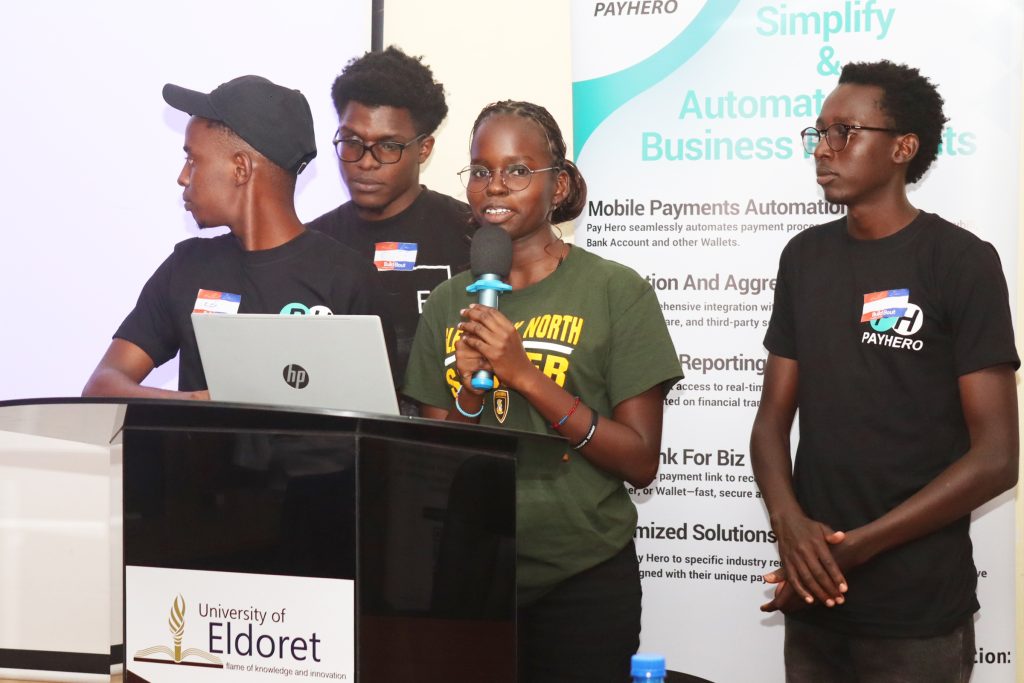
The event, co-sponsored by Pay Hero, was centered around practical building, during which teams would prototype fintech solutions to African business problems. Ronald Ngoda, who is the founder of Pay Hero and a graduate of the University of Eldoret, gave a keynote on the future of fintech in Africa.
Other features such as the API integrations to smooth payment processes were of high importance, and the rules focused on originality and development of new features throughout the event.
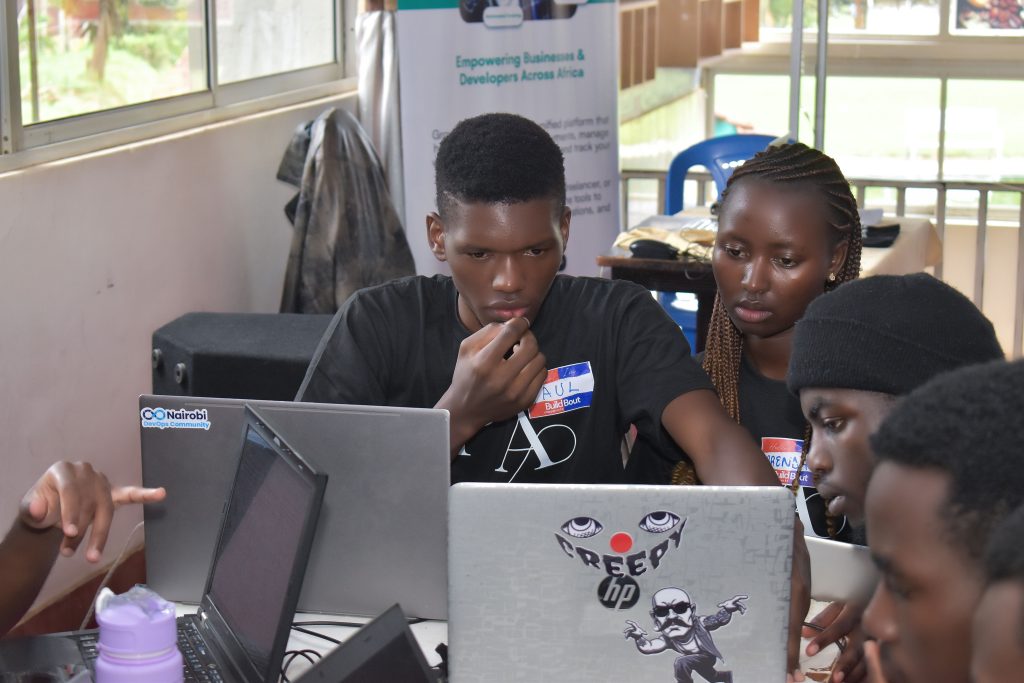
Otherwise, the HackEgerton 2026 at Egerton University was another month-long festival which Pay Hero was proud to sponsor. Students brainstormed, created live solutions and how smarter payment systems would enable businesses throughout the continent. The electric atmosphere was felt, and members were stretching limits to resolve local issues, including underbanked access and cross-border transactions. Pay Hero did not just fund it, but also mentored, wrote API documentation specifically to beginners and offered real-world integrations.
Such efforts are an illustration of a strategic way to grow communities, and why should the tech communities be invested in the expansion? To begin with, they facilitate the academic-industry gap. Hackathons provide hands-on experience where tech education is also largely theoretical, a common factor in Kenya. Students are taught how to work under stress, work in a team, and present ideas to professionals, which can be used directly in the employment sector.
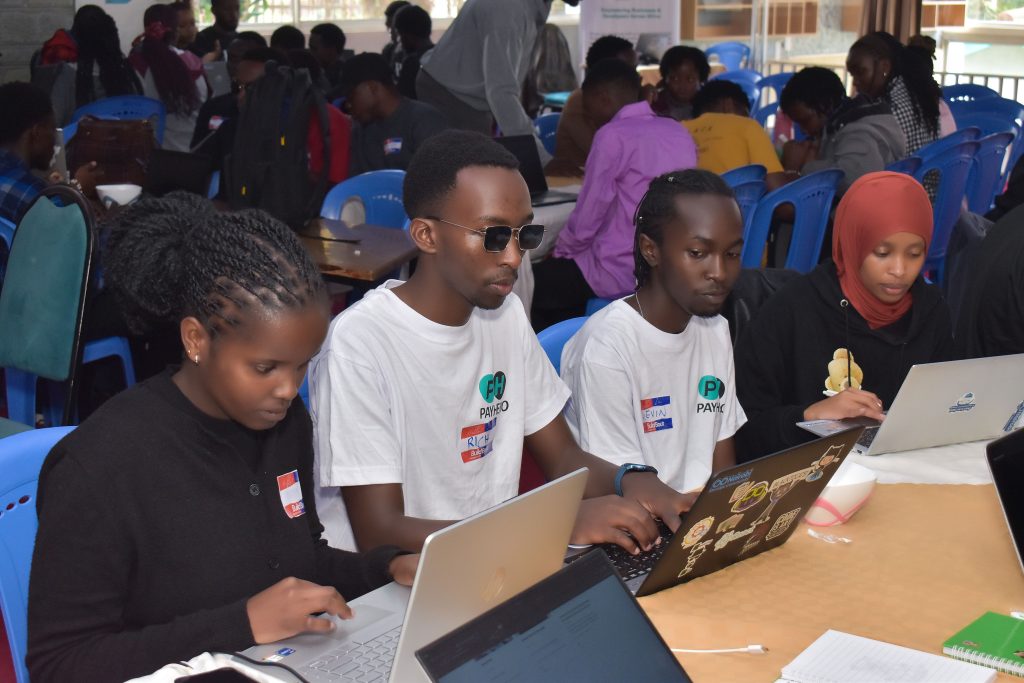
As an example, during Build Bout, participants used Pay Hero APIs in Vercel, which exposed them to tools used in production levels. This does not only develop portfolios, but also builds confidence as could be observed in snippets of the event whereby ideas were fine-tuned by collaboration of builders.
Second, local innovative programs are developed through such programs. The technology industry in Kenya benefits through the solution of African issues, such as financial inclusion and sustainable farming. Hackathons foster innovations such as AI-based credit score or mobile shopping apps, which are directly tied to the digital economy as they combine company APIs. This is in line with Pay Hero because of its goal of creating bold financial solutions, which transform events into startup incubators. By scaling such initiatives, the number of homegrown unicorns would increase, and foreign tech would not be such a significant dependence. Third, such initiatives will encourage inclusivity and decentralization. Such incidents as Eldoret and Egerton go beyond Nairobi, empowering students all over the rural and regional regions.

This is a counterpoint to the city bias of the tech opportunity, such as underrepresented groups in STEM and women. To provide more creativity and equity, tech communities ought to expand them to have a diverse talent pool.The economic consequence is significant. In 2025, fintech was the leader in startup funding in Africa with Kenya pioneering in the sector. Hackathons also provide pipelines of talent to the companies such as PayHero which get first access to innovators when the students get internships or employment. At a macro level, talented young people spur the growth of the GDP, and the World Bank estimates that the contribution to the digital economy may be up to 10 percent by 2030. Through scaling, the efforts by communities overcome unemployment among the youth by investing in job creation and entrepreneurship.Nonetheless, growth demands cooperation. Technology centers, higher education institutions, and companies need to collaborate more, possibly via national ones such as the DigiKen program. Issues such as budget reduction in ICT funding accentuate the necessity of the role played by the private sector as shown by PayHero.To sum up, the student hackathon programs by PayHero Kenya are a case study to success. They develop competencies, achieve innovation, create inclusivity, and drive economic growth. Such programs should not be mere admired in tech communities, but ought to be expanded- sponsored by them, offering resources, and mentoring the youth. With Kenya progressing on the path to a technological future in the year 2026 and beyond, students have the power to get empowered today, which means a technological future with a strong foundation.
