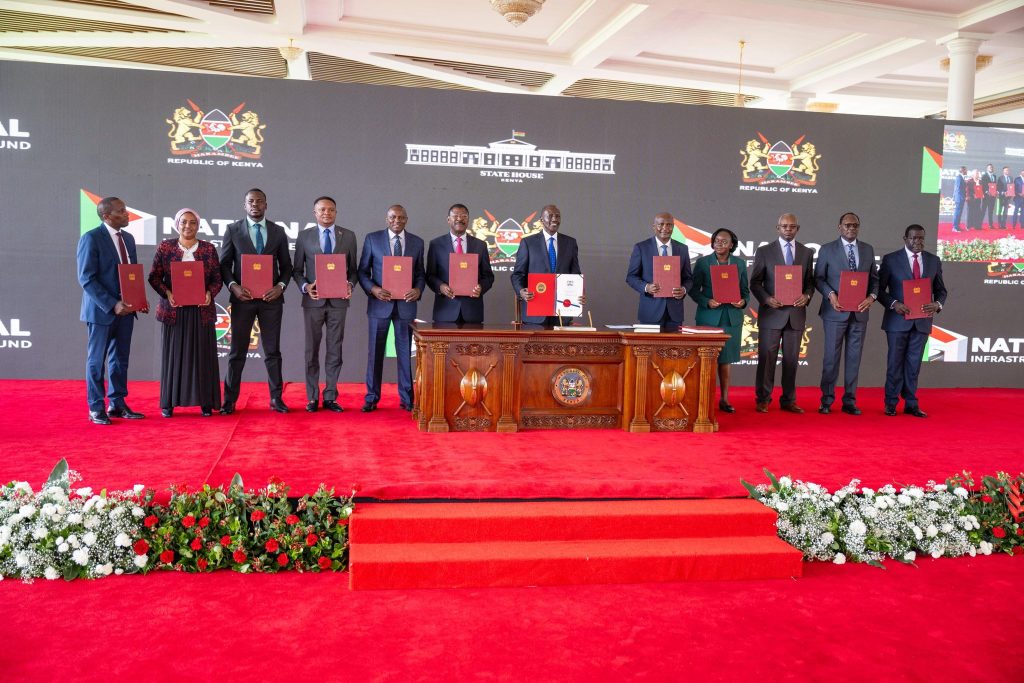
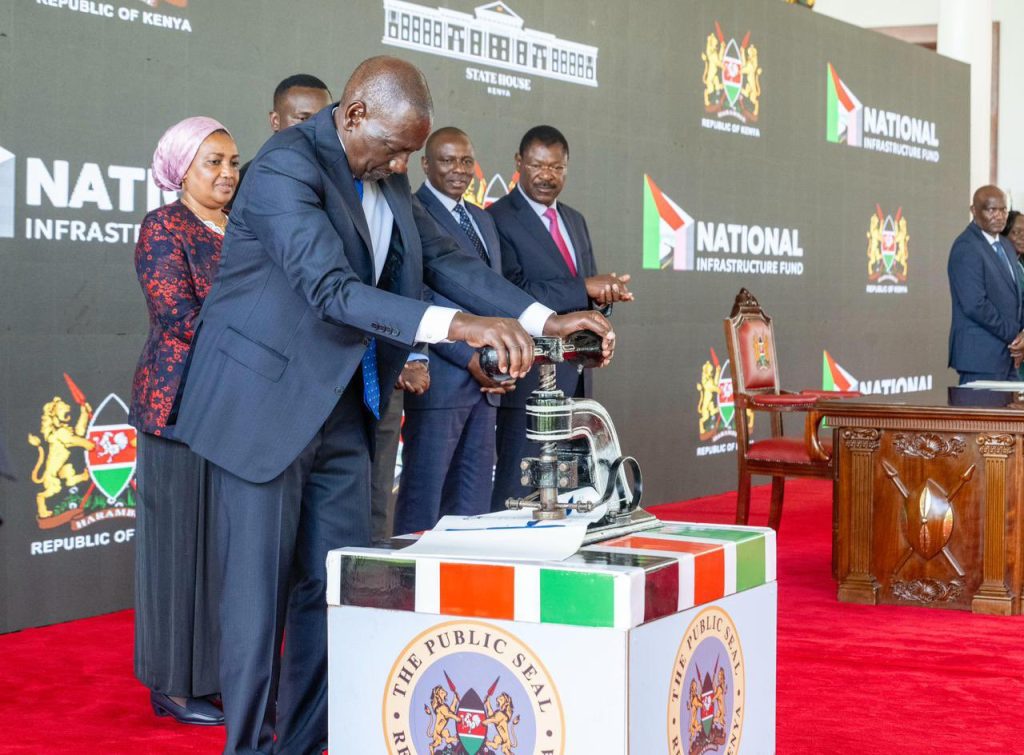
Kenya has officially pivoted from a debt-heavy development model to a sustainable, investment-led approach with the signing of the National Infrastructure Fund (NIF) Bill, 2026. This landmark legislation isn’t just about building roads; it is a strategic maneuver designed to unlock Sh5 trillion over the next decade. But what exactly does the NIF intend to achieve?
1. Breaking the Cycle of Public Debt
For years, Kenya’s infrastructure ambitions have been tethered to sovereign borrowing, often leading to a heavy tax burden and mounting national debt. The NIF’s primary goal is to de-risk the economy by shifting the financing of “bankable” projects—those capable of generating their own revenue—away from the taxpayer’s credit card. Instead of the government taking on loans, the fund acts as a corporate investment platform that pools capital from pension funds, sovereign wealth funds, and private investors.
2. Mobilizing “Idle” Local and Global Capital
The fund intends to unlock trillions in capital that currently sits in institutional coffers. By offering a structured, professional, and transparent vehicle, the NIF makes it safer for local pension funds and international investors to participate in Kenyan development. This “revolving door” model—recycling capital from mature assets like the Kenya Pipeline (KPC) IPO into new projects—ensures that the country’s growth is self-sustaining.
3. Delivering High-Impact “Bankable” Projects
The NIF is laser-focused on projects that provide high utility and sustainable returns. The target list is ambitious and transformative:
- Transport: Extending the SGR from Naivasha to Malaba and Kisumu, modernizing JKIA, and constructing 2,500km of dual carriageways.
- Energy: Boosting clean energy production by 10,000 MW to power the industrialization agenda.
- Water & Food Security: Building 50 mega-dams and over 1,000 smaller dams to revolutionize irrigation and agribusiness.
4. Strengthening Professional Governance
To avoid the pitfalls of past state-run projects, the NIF is structured as a Limited Liability Company. It intends to achieve a new standard of accountability through a Governing Council and a competitively recruited Board of Directors. By barring political influence and mandating strict parliamentary oversight, the fund aims to operate with the efficiency of the private sector.
Ultimately, the NIF is Kenya’s “roadmap to the first world.” By turning strategic national priorities into investable instruments, the fund seeks to bridge the infrastructure gap while securing Kenya’s fiscal future.
